What does it really take to work across disciplines?
- Posted on: 28 September 2026
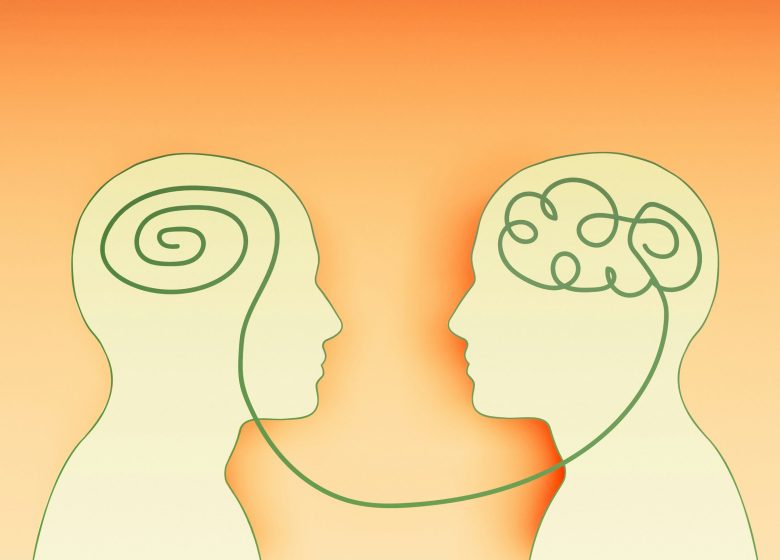
We often talk about interdisciplinary research as essential to tackling complex challenges. Integrated approaches are required to address complex climate and health issues. But what does work across disciplines actually require, and what gets in the way?
Net+ post-docs Monika Walia, May Rodriguez and Charlotte Hawkins come from various disciplinary backgrounds, including epidemiology and public health, data science and social science, respectively. In order to better understand the possibilities of bridging computational and social methods and existing research in this area at the University of Exeter, they hosted a workshop to enable discussion on launching a new ECR network on ‘Connecting Computational and Social Sciences’ on earlier this year.
To reach across the University, the team promoted the event through communities including the European Centre for Environment and Human Health (ECEHH), Public Health and Sports Sciences ECR Network, Egenis Centre, Centre for Environmental Intelligence and Research Coding Community.
Fourteen ECRs and PhDs from various disciplinary backgrounds, including critical data studies, machine learning, humanities and social sciences, public health and mathematics, spent the afternoon discussing each other’s research and getting to know one another. The workshop started conversations towards building an ECR Network that connects computer and social scientists, bringing together researchers from fields including data science, machine learning, humanities and social sciences, public health and mathematics.
Different approaches, shared problems
The lightning talks demonstrated the breadth of work already crossing disciplinary boundaries. The topics included computational analysis of social media data, systems thinking and agent-based modelling to responsible AI, urban green space and migrant mental health, and the use of large language models to analyse qualitative data. They prompted conversations about methods, ethics, qualitative and quantitative approaches, and the decisions researchers make about data and analysis.
But the discussions also exposed some of the reasons interdisciplinary connections don’t always happen.
The confidence gap
One of the key barriers identified by participants was confidence.
Working beyond your discipline means encountering unfamiliar terminology and methods. You may see the value of a computational technique or social theory without knowing enough to use it, or even who to ask.
Participants also highlighted the time needed for trial and error when learning to work differently, often alongside pressure to produce results quickly.
Institutional barriers matter too. Researchers working on closely related problems may sit in different departments, faculties or campuses, with few opportunities to discover one another’s work.
Interdisciplinarity may therefore depend as much on creating connections and confidence as it does on research expertise.
What would make it easier?
Participants had practical ideas: better ways to find colleagues with relevant expertise; interdisciplinary “clinics” or problem-solving spaces; and opportunities to share not just research results but codebooks, workflows and methodological decisions.
There was also interest in practical sessions around emerging tools including LLMs, prompt design and agent-based coding. There was also strong appetite for something decidedly low-tech: meeting in person.
Participants wanted more time for deeper discussion, with future events potentially taking place across different venues and universities in the Southwest.
Creating the space between disciplines
Feedback from the workshop was positive with participants particularly valuing exposure to different interdisciplinary approaches. All respondents wanted to stay connected, while also asking for more discussion and opportunities to explore methods in greater depth.
If we want more interdisciplinary research, it isn’t enough to tell researchers to collaborate across disciplines. We need to make it easier to do.
That means creating spaces to encounter unfamiliar ideas, ask questions, find collaborators and understand different ways of working.
Because the problems we’re trying to solve don’t recognise disciplinary boundaries.
Our research needs the freedom to cross them too.