From mosquitoes to mental health: exploring the breadth of research across the Net Positive Centre
- Posted on: 1 September 2026
What is the economic evidence on the benefits of preventing new mosquito-borne diseases becoming established in the UK? Can domestic gardens help us adapt to climate change? How will rising temperatures change the way we use nature? And what role do care, food systems and urban green spaces play in building healthier, more resilient communities?
These are just some of the questions being explored by researchers across the Net Positive Centre.
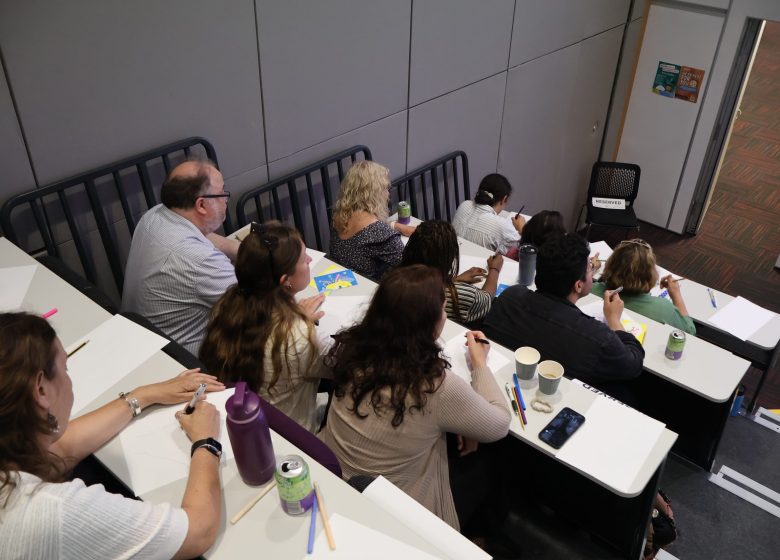
A new highlights film from our Annual Meeting brings together a series of research snapshots that demonstrate the extraordinary breadth of work taking place across the Centre. While the projects span many different disciplines, they are united by a common goal: finding solutions to climate change that improve health, reduce inequalities and benefit the environment.
The research spans the entire climate and health system.
Some projects are investigating how climate change could affect food safety and nutrition in the UK, helping us understand future risks across the food supply chain. Others are asking what it would take to prevent invasive mosquito species becoming established, bringing together economics, public health and environmental science to understand the costs and benefits of acting early.
Nature is another major focus. Work led by Forest Research are exploring how increasing heat, drought, flooding and wildfire may change the way people access and experience green spaces, and what this means for both public health and the management of our landscapes. Others are examining how domestic gardens contribute to climate adaptation while delivering multiple health and environmental benefits as part of urban green and blue infrastructure.
Mental health also features strongly across the Centre’s work. Researchers are investigating the pathways through which climate change affects mental wellbeing and how resilient neighbourhoods, green spaces and food systems can help reduce those impacts. Alongside this, anthropologists are exploring how people’s experiences of climate change are shaped through everyday relationships of care and the wider political and economic contexts in which they live.
The Centre is also investing in the foundations that make future research possible. From developing shared research databases and communities of practice to improving evidence synthesis and understanding how different disciplines measure and define climate and health, this work is helping create the infrastructure needed for better research and better decisions.
What connects all of these projects is not simply climate change, but the belief that the most effective solutions emerge when different disciplines work together.
No single field can answer questions as complex as these alone. Economists, ecologists, public health specialists, psychologists, anthropologists, geographers, environmental scientists, statisticians, classicists, epidemiologists, as well as patient and public involvement, the arts and policy specialists each bring different expertise and perspectives. By bringing those perspectives together, the Net Positive Centre is building a richer understanding of both the challenges we face and the opportunities to create healthier, fairer and more sustainable futures.
Taken together, these projects demonstrate what a net positive approach looks like in practice: generating, synthesising, translating, communicating and mobilising evidence that helps deliver benefits for people, health and the environment at the same time.
As the Centre continues to grow, this collaborative, interdisciplinary research will play an increasingly important role in shaping the evidence needed to support better policy, better places and healthier lives in a changing climate.