Creativity, Culture and Climate Health: Why Culture Matters More Than Ever
- Posted on: 18 May 2026
As Creativity and Wellbeing Week 2026 begins, it feels particularly timely for Net+ to reflect on the recent policy report published by the World Health Organization and the Jameel Arts & Health Lab: The Role of Arts and Culture in Addressing the Health Impacts of Climate Change.
The report arrives at an important moment. As conversations around climate and health accelerate globally, it makes a compelling case for why arts, culture and creative participation must no longer sit at the margins of these discussions. Instead, they should be recognised as critical components of how communities adapt to, process and respond to the growing health impacts of climate change.
Importantly, the report moves beyond seeing culture as a communications tool. It highlights the role artists, cultural organisations and heritage institutions can play in supporting community resilience, strengthening social connection, enabling emotional processing and creating more locally grounded approaches to climate action and public health.
As Creativity and Wellbeing Week reminds us, the evidence is now overwhelmingly clear that arts, culture and cultural participation are not simply “nice to have”. They are fundamental to our individual and collective health and wellbeing.
Yet while the direct links between creativity and health are increasingly recognised, there is far less discussion about the impact climate change is already having on the cultural fabric of our communities — and what this means for health.
Climate change is not only affecting our infrastructure, ecosystems and economies. It is threatening the cultural and creative fabric of our communities, and in doing so it also undermines many of the social and cultural conditions (e.g. connected, resilient communities) that support positive health outcomes.
At the same time, continuing cuts to the UK publicly subsidised arts sector are disproportionately affecting marginalised communities — the very communities already experiencing the sharpest health inequalities linked to climate change. These pressures are not separate. They compound one another.
What is striking is how often culture is still largely absent from conversations about climate adaptation and public health policy. In overlooking culture, we are missing one of the most powerful resources we have for building healthier, more climate-resilient futures.
We absolutely need scientific and technical solutions to the climate crisis. But those solutions must also be meaningful within people’s cultural realities. Creative practice is not simply a vehicle for communicating climate or health science and policy. Artists are not just there to illustrate data or speak about difficult messages. Artists and cultural organisations do something much deeper.
They help communities interpret change, process uncertainty, imagine alternatives and develop emotional investment in the future. They enable missing voices to be heard and create the conditions for collective action. Creative practice can support adaptation, mitigation and community resilience in ways that are locally grounded, participatory and emotionally meaningful.
This is why climate and health policy must work alongside culture-led approaches.
Artists and cultural organisations are often deeply embedded within the places they work. They are trusted institutions with long-standing relationships and an understanding of local context, inequalities and lived experience.
Meanwhile, many cultural organisations and freelance practitioners are already working at the edges of these challenges. Environmental sustainability within arts organisations matters enormously, but the role of culture in climate and health co-benefits must be supported to extend further. We need to build capacity and invite creative practitioners and cultural organisations into wider conversations about adaptation, resilience and systems change because they shouldn’t need to navigate these complex issues alone.
What might it look like if local climate and health policy genuinely integrated cultural strategy?
For example, what if public art works were also designed as flood defences, shade-structures or playful water features. Perhaps cultural events could be held in mobile cooling spaces?
How might arts venues become part of local resilience networks during heatwaves or flooding — acting as refuge spaces, information points, or sites for emergency food distribution?
How might artists collaborate with architects, urban planners and public health teams to implement new responses to reducing air pollution, access to green and blue spaces, food insecurity?
In many ways, culture -led interventions are already demonstrating that they can function as practical climate and health solutions. Across the UK and internationally, artists and cultural organisations are already experimenting with place-based, participatory approaches to climate and health interventions. What is often missing is sustained investment, structural support and meaningful inclusion within policy frameworks.
Culture creates resilience, agency and imagination. It creates spaces where people can rehearse different futures together. In a time of overlapping crises, this matters enormously.
Encouragingly for Net+, many of the recommendations emerging from this new WHO report are already being embedded into our approach.
We are:
- Embedding creative practice and cultural thinking into our research and policy design processes.
- Ring-fencing funding and support for genuinely interdisciplinary programmes that connect arts, climate and health practitioners.
- Developing approaches to map, evaluate and better understand the co-benefits of arts, climate and health initiatives.
- Strengthening partnerships across the UK climate, health and cultural sectors to support long-term collaboration and shared learning.
This work is still evolving, but one thing feels increasingly clear: culture cannot sit at the margins of conversations about climate and health any longer.
We would love to connect with others working across climate, health, arts and culture to explore how we can continue building this infrastructure together. Get in touch if you want to chat.
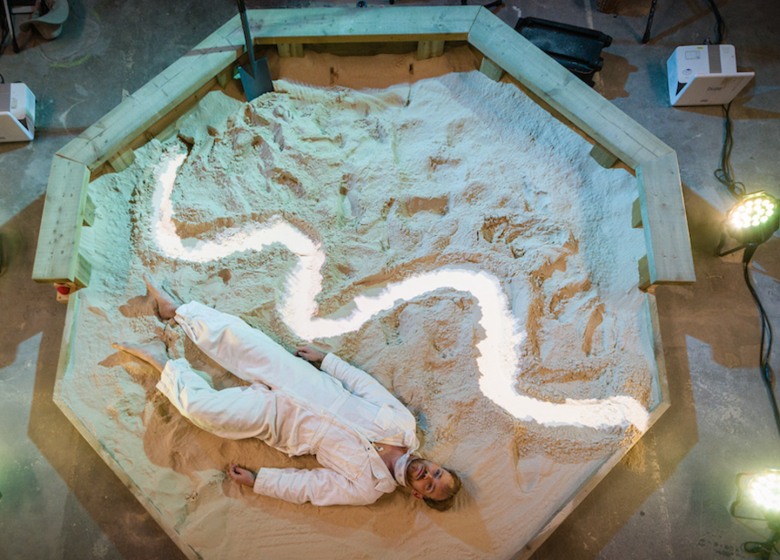
Image: All That Glitters, a 2023 Arts Commission with theatre maker
Tom Jackson Greaves. Credit: Steve Tanner.